| Effect | What is supported | Planning use |
|---|---|---|
| Calorie burn | Higher than flat walking | Raise the grade when flat walking starts to feel too easy. |
| Against running | Similar calorie burn over a longer period, with less strain on the joints; running matched a 30-minute, 12% incline walk in 23 minutes | Choose incline when joints or confidence limit running. Choose running only when minutes are the tightest limit. |
| Cardio effort | Zone 2 training at 65 to 75 percent of max heart rate, like incline walking | Aim for steady, repeatable effort rather than all-out bursts. |
| Muscles worked | Glutes, hamstrings, calves, quadriceps and core | Use incline when you want cardio that also loads the lower body. |
| Starting grade | 3 to 5 percent suggested by a trainer; 4 percent for 10 minutes once a week in a beginner protocol | Begin at the low end and earn each step up. |
| Downhill walking | Adds knee stress and raises injury risk | Keep the training effort on the uphill or level parts of a route. |
These figures come from AARP’s incline walking guidance and Runner’s World’s report on the 12-3-30 study.
The benefits of walking on an incline include a higher calorie burn than flat walking, harder work for the heart and a lower joint load than running, which suits former smokers rebuilding fitness when they start low and progress gradually.
Incline walking is one tool among the exercise to help quit smoking, and the hub guide places it alongside the other fitness and nutrition choices for people who have stopped.
Rebuilding cardio fitness after quitting
Yes, incline walking is a sound way to rebuild fitness after quitting, because it asks more of the cardiovascular system than flat walking while staying a low-intensity activity. On a slope, the cardiovascular system has to work harder to pump blood and oxygen to your muscles. The same source describes incline cardio as effective for burning calories and easy on the joints.
Walking does not have to be fast to count. The American Heart Association, as cited by Success Studio PT, says that walking and running each raise heart rate and improve cardiorespiratory fitness. Runner’s World places incline walking in zone 2 training, at 65 to 75 percent of max heart rate. That is a steady effort you can repeat across a whole session, which is why it works as a first step back into regular cardio.
If breathlessness is what holds you back on climbs, the lung exercises in Breathe Better: Practical Lung Exercises To Improve Capacity, Ease Breathlessness, And Boost Recovery – Canstopsmoking can sit alongside your walking sessions.
Calorie burn and weight control after quitting
Incline walking burns more calories than flat walking. According to Success Studio PT, each step up in treadmill incline costs the body on average about 4% more energy. Treat that as a typical average rather than a promise for any one walker.
Incline walking compared with running
A small study of 16 participants, reported by Runner’s World, tested the 12-3-30 walk: a 12% incline at 3 mph (4.8 km/h) for 30 minutes, without holding the handrail. Running matched its calorie burn in 23 minutes, 7 minutes faster. Incline walking drew 40% of its calories from fat, against 33% for running. AARP adds that incline walking can offer a similar calorie burn over a longer period, with less strain on the joints.
- Pick incline walking when your knees, confidence or current fitness make running unappealing. The calorie burn can be similar if you give it more time.
- Pick running only if saving minutes matters most, since it matched the walk in less time.
- Do not over-read the fat share. The 40% against 33% describes fuel mix, not a weight-loss result. The study’s authors call negative energy balance the main determinant of weight loss.
Weight control after quitting
Incline walking can help control weight after quitting, as one part of your overall energy balance. It raises the calories spent per session compared with flat walking, so it gives you a lever when time is limited. The effect still depends on the whole picture of what you eat and how often you walk. Regular sessions you can sustain will do more than occasional steep ones you dread.
Glutes, legs and core
Incline walking engages several muscle groups: glutes, hamstrings, calves, quadriceps and core. Walking uphill also changes the activation of the muscles you use, with a wider range of joint angles and greater leg muscle recruitment than flat walking.
For someone returning to exercise, this makes a single activity do two jobs: raising heart rate and loading the glutes and thighs. Walkers who want leg and hip work but dislike gym machines or impact can get it from the slope alone.
Setting the incline and building up
Start on a low incline and increase it gradually as you improve, over days and weeks, as SteelFit’s guidance advises. A trainer quoted by AARP recommends starting with a 3 to 5 percent incline. The beginner protocol reported by Runner’s World begins with 10 minutes at a 4% incline once a week, then adds 2% of incline and 5 minutes every two weeks.
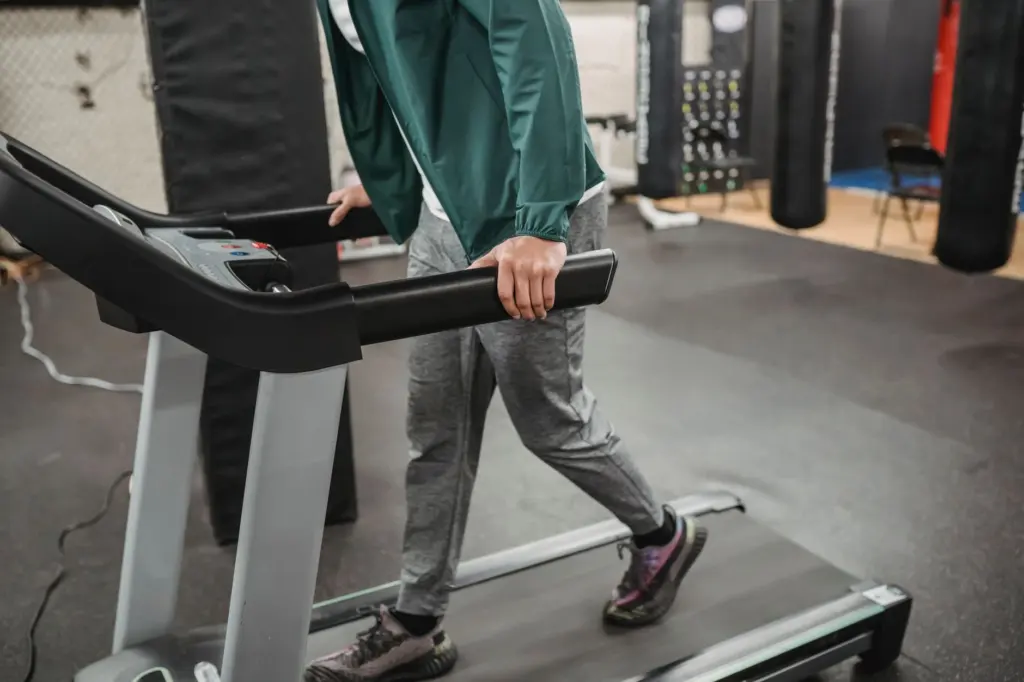
- Hold your level until it feels easier. Raise the incline only when the current one no longer challenges you, not on a fixed date.
- Move both dials slowly. The protocol above increases incline and duration only every two weeks, which keeps each change small.
- Build a flat-ground base first if you are very new to treadmills. The schedule in Beginner Treadmill Walking Workout: A 4-Week Plan To Build Fitness And Burn Calories – Canstopsmoking shows how to add minutes before adding grade.
Walking inclines outdoors
A hill gives the same uphill demand as a treadmill slope, though without a percentage readout. Choose a route that really climbs, because a flat road is simply flat walking. Begin with a gentle slope and lengthen the climb as your fitness improves, following the same low-to-higher logic as on a treadmill.

Descents deserve care. Walking downhill can add stress to your knees and increase the risk of injury, so treat the way down as a stretch to manage carefully rather than as extra training.
Frequently asked questions
How often should I do incline walks?
Incline walking can be done three times per week as part of a balanced fitness routine, with rest days between sessions.
How steep can a treadmill go?
According to SteelFit, most treadmills can be adjusted from a 0 to 15 percent incline. That is the machine’s range, not a target; most of the range is headroom for later.
Who should skip the 12-3-30 workout?
Runner’s World advises beginners, and people who already have knee or lower back problems, to avoid it. Build up with a gentler incline first.