| Starting point | What is supported | Planning use |
|---|---|---|
| Before the first run | Speak with a healthcare provider before beginning any exercise routine such as running | Book the conversation before buying kit and let the clinician set your start date. |
| First pace | Focus on your breathing pace and get comfortable jogging, taking breaks as needed, before increasing intensity | Keep early jogs easy and walk whenever your breathing runs ahead of your legs. |
| Session shape | Walk for the first 10 minutes and the last 5 minutes; jog easily in the middle 15 minutes | Treat the walking as part of the session, not a failure to run. |
| Interval pattern | Jog 30 seconds, walk until recovered, then jog 30 seconds again | Start with short jogs and let recovery, not the clock, set the walk length. |
| Breathlessness | Building exercise tolerance reduces the out-of-breath feeling over the longer term; no timeline is given | Judge progress across weeks, not single sessions. |
| Plan length | Training daily takes about one month; training every other day takes about two months | Choose the slower version if your lungs and legs are still adapting. |
These points come from the American Lung Association’s breathing basics for runners and Hal Higdon’s beginning runners guide.
How to start running for beginners who have quit smoking: get a clinician’s go-ahead, alternate walking and jogging, and keep every effort comfortable. Breathlessness eases with longer-term exercise tolerance, so progress is gradual.
Running is one of the most accessible forms of exercise to help quit smoking, and a short, fixed session can fill the time of day you used to smoke. The plan below turns that into eight weeks of manageable steps.
Starting soon after quitting: the check that comes first
You can start running soon after quitting, provided a healthcare provider agrees. The American Lung Association says that before beginning any exercise routine such as running, it is important to speak with your healthcare provider. The decision rests with your clinician rather than a fixed smoke-free date, so the practical step is a conversation, not a countdown.

What you do next depends on the answer:
- Cleared and keen: begin with walk-run intervals rather than continuous running. Hal Higdon’s advice for beginners is that it is better to do too little than too much, and he notes that people adapt at different rates.
- Advised to wait or adjust: follow the clinician’s guidance on what activity to do in the meantime, then return to the plan when you are given the green light.
- Cleared but nervous: the early sessions are deliberately short and mostly easy, so the first week asks less of you than the idea of running suggests.
Pacing a first run as a former smoker
A first run should feel controlled. The American Lung Association advises runners to focus on their pace of breathing and get comfortable with jogging, taking breaks as needed, before increasing intensity. For a former smoker that means breathing sets the speed, not the other way round.
Pick the interval length that matches how you feel on the day:
- If a jog leaves you gasping: use Higdon’s pattern of short jogs, walking until you are recovered. The recovery time is yours to set.
- If short jogs feel easy: try a run-walk pattern with longer jogging stretches, then walking for the same amount of time, repeated through the session.
- If you feel unsteady or unusually breathless: stop and walk. Skipping the next interval costs far less than pushing through.
Fixed run times also help the habit. A short session in the slot where a cigarette break used to sit gives that part of the day a different job.
The eight-week walk-run plan
This plan is built from published beginner programmes and keeps the structure simple. Each session follows Higdon’s frame of walking for the first 10 minutes and the last 5 minutes, with easy jogging in between. Follow it in two stages:
- Weeks 1 to 4, building the base. One beginner get-started progression begins in Week 1 with 4 minutes of walking and 2 minutes of jogging, and reaches 1 minute of walking and 5 minutes of jogging in Week 4, with 5 cycles each week. The weeks in between step gradually from one pattern to the other.
- Later weeks, lengthening the jogs. Keep the walking breaks and lengthen the jogging stretches only when the previous week felt comfortable. Change one thing at a time, and avoid raising total weekly mileage by more than 10% from the previous week.
On frequency, up to three running days per week is considered the maximum for beginners, with rest or cross-training between sessions. Higdon’s version of the 30/30 plan takes about two months when you train every other day, which suits anyone who wants the gentler pace.

If weather or confidence keeps you indoors, the Beginner Treadmill Walking Workout: A 4-Week Plan To Build Fitness And Burn Calories – Canstopsmoking offers a walking-only way to build fitness before or alongside the jogging weeks.
Running shoes and basic gear
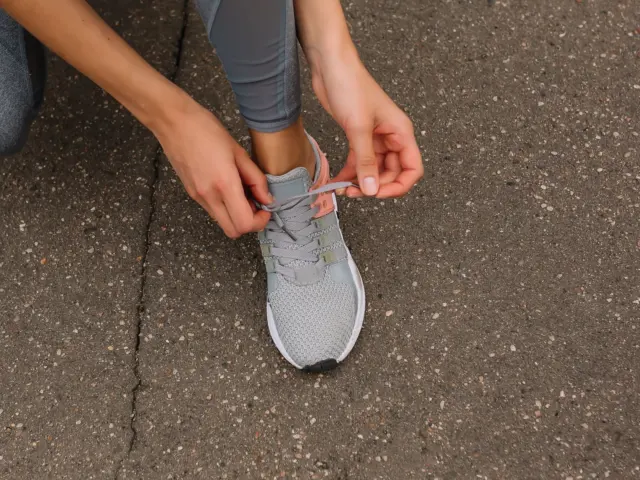
Shoes are the one purchase worth making properly. Running-specific shoes are very helpful for beginners, and worn-out pairs offer less cushioning, which increases the impact forces on your muscles, tendons and joints.

- New to running: choose shoes made for running instead of reusing old trainers.
- Shoes already worn down: replace them before starting; lost cushioning raises the load on tendons and joints just as your body is adapting.
- Tight budget: spend on the shoes first. Clothing and gadgets add little to a plan built on walking and easy jogging.
Why running feels hard on the lungs
Running feels hard at first because it demands far more air than daily life does. The American Lung Association explains that at rest we may only use a little of our lung capacity, breathing at what is called tidal volume. Running asks for more of that capacity, so the first sessions can feel disproportionately hard even when your legs are fine.
That is why walk breaks are useful. They keep sessions inside what your lungs can supply while you build exercise tolerance. Cardio exercise is also something the same organisation encourages: it recommends that people with lung disease stay active and exercise as much as they can, with clinician guidance. Staying consistent over weeks is what reduces the out-of-breath feeling.
Warm-up, form and stopping signals
Before each run, spend a few minutes on stretching with movement, known as dynamic stretching. After the run, the closing walk in the session frame serves as the cool-down.
Form matters more than speed at this stage: good form helps reduce your risk of injury and improves efficiency. If pain appears, stop, even if that means skipping planned runs for a few days. A short pause protects the plan better than running through an injury.
Fuel matters too. For snack ideas to have between sessions, see Low‑Carb, Low‑Calorie Snacks That Keep You Full — 2026 Guide To Smart, Satisfying Choices – Canstopsmoking.
Frequently asked questions
How long until breathing improves when running?
The American Lung Association says that longer term, building up exercise tolerance will help reduce the out-of-breath feeling, without giving a timeline. For reference, Higdon says people who train continuously on the 30/30 plan are able to cover between one and two miles walking and jogging after 30 days. A returning runner needs about 4 to 6 weeks to develop a base.
Is there a breathing pattern to use while jogging?
Yes. The American Lung Association describes 3 steps as you inhale and 2 steps as you exhale as a rhythmic pattern. At a faster pace it suggests 2 steps in and 1 step out.
What if I have a lung condition?
Speak to your pulmonologist or healthcare provider before beginning or changing exercise. The American Lung Association also recommends that people with lung disease stay active and exercise as much as they can, so the aim is a safe plan agreed with your clinician, not avoiding activity.