Bought a used car that smells of cigarettes, or quit and want the cabin fresh? Here is how to get smoke smell out of car interiors: air it out, clean every fabric surface, treat the vents and replace the cabin filter.
Clearing the cabin is a practical job that often comes with a decision to quit, and the guide on what happens when you quit smoking explains the health gains that make the effort worthwhile. The steps below run from the easiest to the most involved, so stop as soon as the smell is gone.
Why a quick air-out rarely finishes the job
The most common misunderstanding is that a smoky car only needs fresh air. Airing helps, but it clears stale air rather than residue. Smoke particles can penetrate porous surfaces, including fabric and upholstery, according to a professional smoke and odor removal service. That is why the smell can return once the windows are closed again.
Airing is still the right place to start. A service-shop guide suggests leaving the windows completely down for a while on a clear day. A dealership service blog adds that you should roll down all windows and drive for 15–20 minutes to flush stale air. Park with the windows open first, then drive, and only then start on the materials that hold the smell.
| Common belief | What the guidance indicates | Better move |
|---|---|---|
| Driving with the windows down fixes it | Driving for 15–20 minutes with all windows down flushes stale air from the cabin. | Treat it as the opening move, then clean the materials that hold the smell. |
| Baking soda works the moment it goes on | A detailing guide waits at least 30 minutes before vacuuming it up. | Let it sit before you vacuum, and leave it longer if the smell is strong. |
| Cleaning the seats clears the vents | Odor neutralizer goes into the intake vent with the A/C at maximum; a dealership guide runs it for 5–10 minutes with the windows closed. | Treat the ventilation system as its own task. |
| Ozone is a simple do-it-yourself shortcut | Ozone gases are harmful when inhaled, so treatment belongs only in an unoccupied vehicle. | Keep everyone out of the car during any ozone treatment. |
The airing, wait-time and vent figures in the table come from dealership service guidance and an auto detailing guide.
Odor absorbers and what each one suits
Absorbers are the low-effort part of the job. Each one suits a different surface or timeline, so choose by how much time the car can sit and which materials smell worst.
- Baking soda for seats and carpets. A service-shop guide says to liberally sprinkle it over seats and carpets and let it sit a few days before vacuuming. Another guide waits at least 30 minutes. So does baking soda remove smoke smell? It is a standard absorber for fabric surfaces and earns its place in the routine, but it only works where it is sprinkled, so it will not reach the vents or the ceiling. If the car can stay parked, the longer wait is the more thorough choice; if you need the car daily, the shorter wait still follows the guidance.
- Vinegar and water spray for upholstery and carpets. An auto detailing guide mixes half water and half vinegar and sprays it on. It suits cloth seats and carpet, the surfaces that guide names, and it makes a sensible second pass after baking soda has been vacuumed away.
- Activated charcoal for passive absorption. The dealership guide places activated charcoal bags (Moso Natural Air Purifying Bags in its example) under the seats for 5–7 days, while the detailing guide leaves an open container of charcoal in the car for a few days. Charcoal asks for no effort beyond placement, so use it alongside the cleaning steps rather than instead of them.
Baking soda leaves the car only when you vacuum it up, so finish with a slow, thorough pass over seats and carpet before moving on to deeper cleaning.
Upholstery and headliner
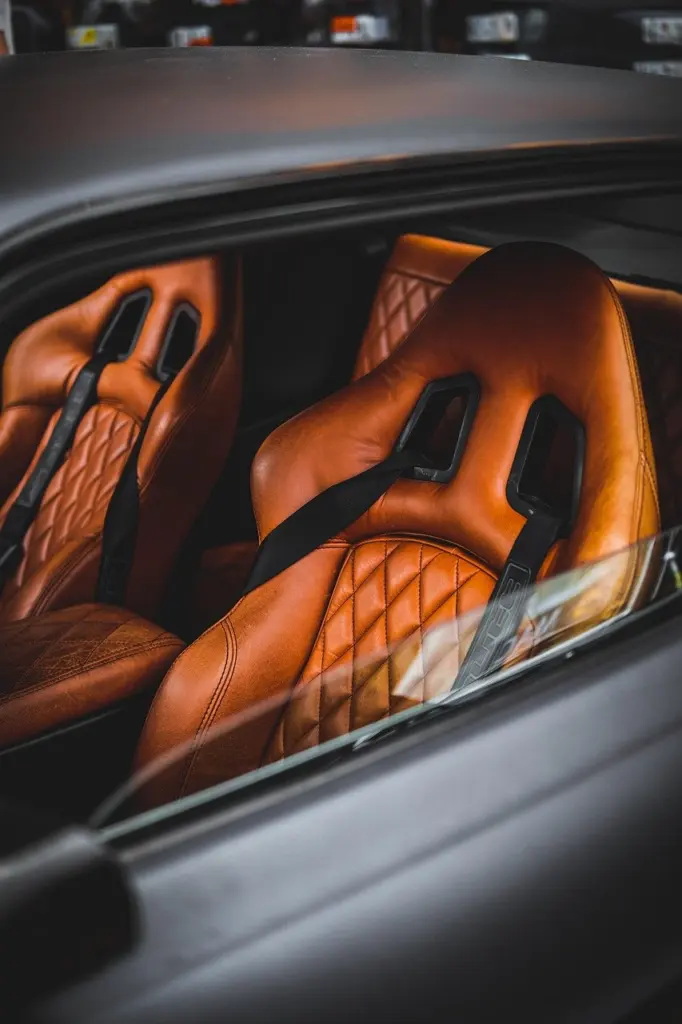
Fabric is where smoke settles, and the ceiling deserves as much attention as the seats. Because smoke rises, the dealership guide has you clean the ceiling fabric, known as the headliner, with a microfiber cloth and upholstery shampoo. Skipping the headliner is a common reason a car still smells after the seats have been cleaned.
Choosing a method by surface
- Cloth upholstery and carpet. Use the half-water, half-vinegar spray described above, or upholstery shampoo. These are the surfaces the guidance addresses directly.
- Headliner. Use a microfiber cloth with upholstery shampoo rather than soaking the ceiling.
- Heavily affected fabric. The detailing guide says steam cleaning works well for smoke restoration cleaning, including on fabrics and the headliner, which makes it the next step up when shampoo and spray have not been enough.
Seat material matters when you pick a product. The methods here are described for fabric upholstery and carpet, so confirm what your seats are made of before you spray or shampoo.
Vents and the cabin air filter
Cleaning the seats does not clean the air path. Treat the vents separately, then deal with the filter that sits in that path.
Treating the vents
The dealership guide sprays an HVAC treatment product into the intake vents, which are usually near the windshield wipers. Set the A/C to maximum, keep the windows closed and run it for 5–10 minutes. The detailing guide gives the same approach: spray an odor neutralizer into the intake vent with the A/C at maximum. Do this after cleaning the fabrics so the treated air has less smoke residue to pick up on its way through the cabin.
Replacing the cabin air filter
Should you replace the cabin filter? Yes, and it is one of the cheaper fixes. The service-shop guide describes replacements as generally inexpensive with a great effect on the overall smell. A professional service recommends replacing the cabin air filter and using a specialized HVAC cleaner together, which pairs naturally with the vent treatment above.
On timing, the dealership guide says the cabin filter is commonly replaced around 15,000 miles or yearly, and sooner in smoky or dusty use. A car that has been smoked in belongs in the sooner category. Confirm the filter type and access for your model in the owner’s manual.
Ozone and professional detailing
Ozone machines are often offered as a final fix, but the detailing guide warns that ozone gases are harmful when inhaled and limits their use to an unoccupied vehicle. For most owners, the cleaning steps above come first and are safer to do at home.
If the smell survives them, a professional smoke and odor service covers the same ground: steam cleaning of fabrics, filter replacement and HVAC cleaner. Ask for a written quote that lists which of those are included so you can compare offers like for like.
Keeping the smell from returning
Because smoke residue settles into porous materials, smoking in the cabin again restarts the problem. A smoke-free car is what makes every step above last. Keep an open container of activated charcoal in the car if you want ongoing absorption, and bring the filter forward on the replacement schedule if the car has been smoked in.
Anyone also leaving vaping behind can read The Health Benefits Of Quitting Vaping: What You Gain Immediately And Over Time (2026 Guide) – Canstopsmoking for the health side. For residue on skin rather than upholstery, How To Remove Nicotine Stains From Fingers: 7 Fast, Safe Methods That Work In Minutes – Canstopsmoking covers it.
Frequently asked questions
| Question | Answer |
|---|---|
| How do I get smoke smell out of a car? | Work from air to surfaces to ducts: ventilate, vacuum and treat seats, carpets and the headliner, then treat the vents and replace the cabin filter. |
| Does baking soda remove smoke smell? | It is a widely recommended absorber for seat and carpet fabric, used before vacuuming, but it does not treat the vents or ceiling on its own. |
| Should I replace the cabin filter? | Yes. A new filter is generally inexpensive and can noticeably change the overall smell, so it is worth doing after a smoky car has been cleaned. |