Knowing how to get smoke smell out of house after you quit comes down to removing residue, not masking it: clean hard surfaces, treat soft furnishings, then air and filter the rooms.
A former smoker opens the front door after a weekend away and the smell is still there, even with every window open. That is normal, and it is part of what happens when you quit smoking: the habit ends before the home catches up. The plan below works through the house surface by surface.
Why airing out is not enough
Smoke leaves a film of nicotine, tar and resin on surfaces, and Quit Now New Hampshire calls cleaning that residue the essential first step. Soft goods hold the odor deeper. According to Go Green Restoration, carpet backing, upholstery foam, mattresses, drapery and clothing absorb through their full thickness. Absorbed compounds then re-release as temperature and humidity rise, which is why a house can smell fine on a cool day and stale on a warm one.
Most failed clean-ups rest on a few comfortable assumptions. The table sets each against what the evidence supports.
| Common belief | What actually happens | Planning use |
|---|---|---|
| Opening the windows removes the smell | Fresh air dilutes the odor but does not remove it permanently, and it only helps the airborne part | Ventilate during and after cleaning, never instead of it |
| A HEPA purifier on its own is enough | HEPA captures suspended particulate but does not address vapor-phase odor | Choose a unit that also has activated carbon |
| Vacuuming the sofa cleans it | Surface vacuuming does not reach the foam, and soft goods absorb through their full thickness | Wash what is washable and consider professional carpet cleaning for the rest |
| Ozone is a simple do-it-yourself fix | Ozone is an effective oxidiser but genuinely unsafe to breathe | Keep people out of the space, or use an occupied-space alternative |
These findings come from Urban Floor and Go Green Restoration.
Ventilation: the first step, not the whole job
Start with open windows, because Urban Floor advises keeping the affected area well ventilated both before and after cleaning. Fresh air costs nothing and clears the airborne fraction of the smell. Add fans to speed things up: Merry Maids suggests running them alongside open windows to boost the breeze.
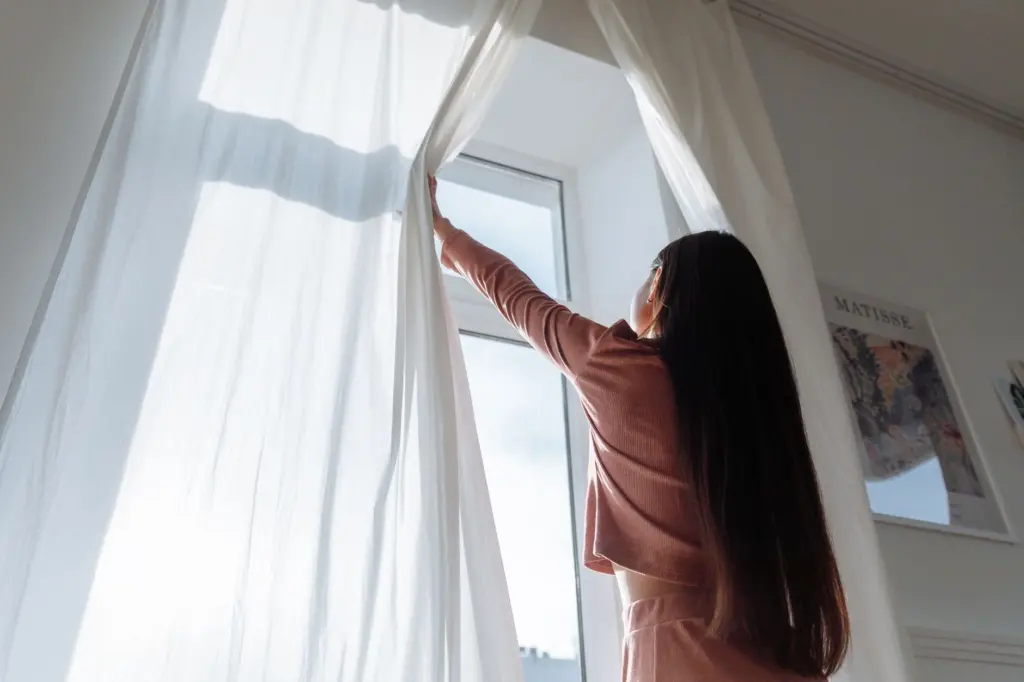
Expect the smell to come back once the windows close. Air does nothing for odor already absorbed into walls and furnishings, so treat the airing as preparation for the cleaning that follows.
Walls, glass and other hard surfaces
Wipe hard surfaces before anything else, since the sticky residue is what keeps releasing odor. Wash from the top down: ceilings, walls, window frames, baseboards, then floors.
Vinegar helps here as a cleaning aid, not a magic deodorizer. Merry Maids describes mixing equal parts water and white vinegar in a spray bottle and misting the affected areas. For mirrors and windows, Urban Floor recommends cleaning with vinegar and then rinsing with clean water. Vinegar suits glass and sealed hard surfaces best. Treat fabric differently, as the FAQ below explains.
Do not reach for scented products to finish the job. Candles and room sprays only mask the smell temporarily, and the smoke odor returns once the fragrance fades.
Carpet, upholstery and soft goods
Soft goods need a different approach because the odor sits inside them. Choose the method by material:
- Carpet and upholstered furniture: sprinkle baking soda and leave it to settle for a day or so before vacuuming it up, as Quit Now New Hampshire describes. Baking soda is a surface treatment, so it works best on lightly affected pieces.
- Washable fabrics: curtains, bedding and clothing can go through hot water and a strong detergent, according to Merry Maids.
- Carpets that stay smelly: consider a professional carpet-cleaning service. If you hire or rent equipment and do it yourself, Urban Floor says to follow the owner’s manual strictly.
- Foam, mattresses and heavy drapery: because they absorb through their full thickness, surface vacuuming will not finish the job. If repeated treatment fails, replacing the item is the realistic option.
Air purifiers and HEPA filtration
Yes, an air purifier can reduce smoke smell, provided it has the right filters. A HEPA filter removes suspended particulate continuously while you work, but by itself it does not address vapor-phase odor. Activated carbon is, in Go Green Restoration’s words, the correct filtration answer for the compounds HEPA cannot capture, and the two are often paired. Merry Maids makes the same split for consumer units: HEPA captures even the tiniest smoke particles, while carbon filters absorb odors.
Use the purifier as a support, not a substitute. It cleans the air that passes through it, while the residue on walls and the odor locked in fabrics keep feeding fresh smell into the room. For that reason, run it alongside the cleaning above rather than in place of it.
Ozone treatment and safer alternatives
Ozone is safe only when nobody is breathing it. It is an effective oxidiser, but Go Green Restoration describes it as genuinely unsafe to breathe, so it is not a treatment to run in a home you are living in. The same source describes hydroxyl generation as slower than ozone but safe to run in an occupied space, which is why it calls hydroxyl the usual professional choice.
For most homes that held cigarette smoke, thorough cleaning, soft-goods treatment and filtration come first. Consider ozone or hydroxyl only if a smell survives all of that, and check the equipment’s own safety instructions before using either.
A room-by-room order of work
Sequence matters, because cleaning one room while the heating and cooling system pushes smoky air through it wastes the effort. Follow this order:
- Check the system. Smoke odor hides in the HVAC system, and cleaning the house without it means recontaminating the house, according to Go Green Restoration.
- Open up and run fans. Ventilate the room you are about to clean.
- Wash hard surfaces. Work from ceilings to floors, using the vinegar-and-water spray and a glass rinse where it fits.
- Treat soft goods. Launder, apply baking soda, and arrange professional cleaning for carpets that still smell.
- Filter the air. Run a HEPA-plus-carbon purifier in the finished room.
- Check the result. Re-test the room, ideally on a cooler day and again on a warmer one, since heat and humidity bring absorbed odor back out.
Keeping the house smoke-free
The cleaning only lasts if smoke stops entering the house. Every smoke-free week keeps the work from being undone, and the benefit goes beyond the smell: even cutting down is not harmless, as the guide on is smoking one cigarette a day bad explains. Smoke leaves its mark on the body as well as the home, and the teeth are often the next thing people notice; see How To Remove Nicotine Stains From Teeth: Safe, Fast Methods That Work In 2026 – Canstopsmoking.
Frequently asked questions
| Question | Answer |
|---|---|
| How can I tell whether the smell is in the air or in the materials? | Close the house for six hours with the HVAC off, then walk in from outside, as Go Green Restoration describes. A strong smell on entry points to odor held in materials rather than just lingering air. |
| Do scented candles or room sprays help? | They only mask the smell temporarily, so the smoke odor comes back. Use them, if at all, after the cleaning is done. |
| Should I test vinegar and baking soda before using them widely? | Yes. Try them on a concealed area first, and be especially careful on fabrics: vinegar can harm some, and you may need to repeat the treatment. |
| Can I seal surfaces to lock the odor in? | Only as a last step. Clean first, confirm the surface underneath is sound, and seal only what cannot be replaced. |