High protein low calorie snacks help people eat less and feel full between meals. This guide lists options that pack protein, cut calories, and travel well. It gives clear criteria for smart choices and simple recipes. The tone stays practical. The reader will find ready-to-eat choices and quick DIY ideas they can use today.
Key Takeaways
- High protein low calorie snacks help control appetite and support weight management by increasing satiety and reducing cravings.
- Aim for snacks with 10 to 20 grams of protein and 100 to 250 calories that also include fiber for added fullness and travel well without refrigeration.
- Ready-to-eat options like Greek yogurt, cottage cheese, and hard-boiled eggs provide convenient, protein-packed snacks requiring minimal preparation.
- Simple DIY recipes such as yogurt parfaits and tuna snack packs deliver balanced protein and calories for quick, nutritious snacking.
- Choosing high protein low calorie snacks supports steady energy levels, muscle maintenance, and reduces the likelihood of overeating at meals.
Why Choose High-Protein, Low-Calorie Snacks?
High protein low calorie snacks increase satiety and reduce cravings. Protein slows digestion and keeps energy steady. Low calorie snacks help control daily energy intake. Together they support weight control and muscle maintenance. They fit into a busy day and require little prep. For people who want steady energy, they beat sugary snacks. For athletes, they help recovery without excess calories. For anyone dieting, they lower the chance of overeating at the next meal.
Beyond weight and appetite control, these snacks can preserve lean mass during calorie restriction and support stable blood sugar between meals. Choosing nutrient-dense options — those that provide protein along with fiber, vitamins, or healthy fats — stretches the benefit of each snack: you get better fullness and more useful micronutrients for the calories consumed. Finally, focusing on portable, shelf-stable, or short-term refrigerated choices makes it realistic to stick with healthier snacks across a workday, commute, or exercise routine.
How To Pick Smart Snacks: Protein Content, Calories, And Portability
Choose snacks that list protein and calories per serving. Aim for 10 to 20 grams of protein and 100 to 250 calories per snack. Check ingredient lists for added sugars and excess oil. Prefer snacks with at least 5 grams of fiber for added fullness. Pick items that travel well and do not require refrigeration when possible. Compare serving sizes to what the package shows. They should fit common containers or a small cooler. They should match the planned activity and meal schedule.
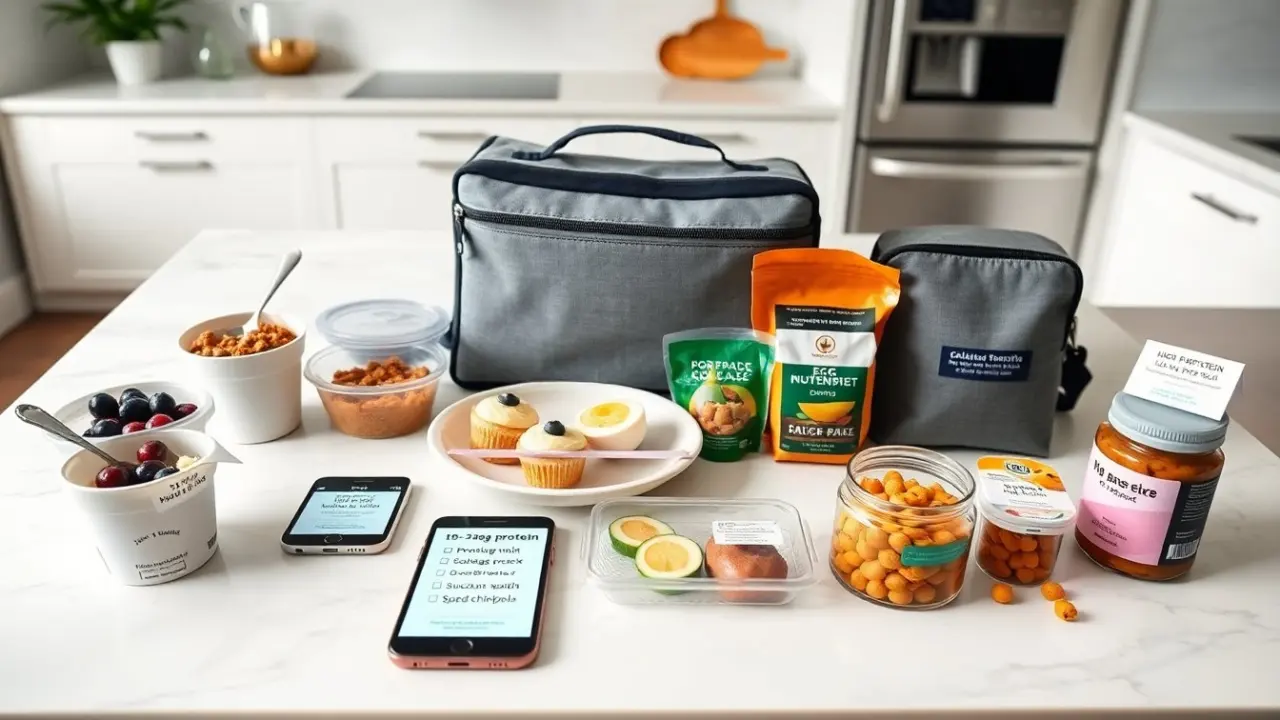
When evaluating packaged snacks, read the nutrition facts for serving size, protein, total calories, fiber, and added sugars. A product labeled “high-protein” can still have excess calories or sugar — compare the grams-per-calorie ratio. For perishable items, plan short-term storage: use an insulated lunch bag with an ice pack for dairy, eggs, or prepared salads. For all-day portability, prioritize single-serve canned or pouched proteins (tuna, salmon), vacuum-packed jerky, roasted edamame, or portioned nut packs. Finally, think about how you’ll eat the snack: some options need utensils or a plate, others are truly grab-and-go.
10 Ready-To-Eat High-Protein, Low-Calorie Snacks
This list focuses on convenience, protein density, and low calories. Each item gives a quick note on protein and calories.
Dairy And Egg-Based Options (Yogurt, Cottage Cheese, Hard-Boiled Eggs)
Greek yogurt delivers about 15 grams of protein for a 6-ounce serving and roughly 100 to 130 calories for nonfat varieties. Cottage cheese offers 12 to 14 grams of protein per half-cup and about 80 to 100 calories in low-fat forms. A hard-boiled egg gives 6 grams of protein and 70 calories. They all require minimal prep, store well for a day in a cooler, and pair nicely with fruit or whole-grain crackers for added fiber and texture.
Other ready-to-eat picks to round out the top 10:
- Single-serve tuna or salmon pouches — convenient, 15–20 grams protein per pouch, low in calories when packed in water; pairs with cucumber or whole-grain crackers.
- Beef or turkey jerky (low-sugar varieties) — portable, 8–12 grams protein per ounce; pay attention to sodium and added sugars.
- Edamame (shelled, ready-to-eat) — about 8–11 grams protein per half-cup and provides fiber and micronutrients; can be found fresh or frozen.
- Low-fat string cheese or cheese sticks — simple dairy option with roughly 6–8 grams protein and 60–80 calories each; good for travel with minimal cooling.
- Roasted chickpeas or seasoned lentil snacks — crunchy plant-based option with about 6–8 grams protein per half-cup and fiber to boost fullness.
- Protein yogurt tubes or pouches — portable versions of Greek yogurt, often 10–15 grams protein per serving; check sugar content.
- Portioned mixed nuts with dried edamame or roasted soy nuts — a small 1-ounce portion can provide 6–8 grams protein; keep portions small to control calories.
- Low-sugar protein bars — choose bars with clear protein and calorie numbers (aim for the 10–20 g protein, 100–250 calorie window), and prefer ones with fiber and minimal added sugar.
These options cover refrigerated, shelf-stable, and single-serve choices so you can pick what fits your routine. Prioritize whole-food sources when possible (eggs, plain yogurt, canned fish), and use packaged items selectively when convenience matters most.
Easy DIY High-Protein Snack Recipes You Can Prep In Minutes
- Yogurt Parfait: Layer 3/4 cup nonfat Greek yogurt, 1/4 cup berries, and 1 tablespoon chia seeds. This yields about 18 grams of protein and 160 calories.
- Tuna Snack Pack: Mix a 3-ounce can of tuna with 1 tablespoon plain yogurt and lemon. Serve with cucumber slices. This yields 20 grams of protein and 120 calories.
- Cottage Cheese Bowl: Combine 1/2 cup low-fat cottage cheese with 2 tablespoons chopped walnuts and cinnamon. This yields 14 grams of protein and about 170 calories.
- Spiced Roasted Chickpeas: Toss 1/2 cup canned chickpeas with 1 teaspoon olive oil and spices. Roast 20 minutes. This gives 7 grams of protein and 160 calories.
- Egg Muffins: Whisk three eggs white and one whole egg, add spinach and diced pepper, pour into two muffin cups, bake 12 minutes. Two muffins yield about 14 grams of protein and 130 calories.
Tips for prepping and storing these DIY snacks: use portioned containers to control serving size, label with date if storing more than a day, and keep perishable items chilled. Swap ingredients to match preferences — add a tablespoon of nut butter to the cottage cheese bowl for extra flavor (counts toward calories), or use low-sugar fruit to keep overall sugars down. Many of these recipes can be doubled and stored for 24–48 hours for grab-and-go convenience.
Pair snacks with water or unsweetened tea to support hydration without adding calories. Use the protein-and-calorie targets in this guide as flexible ranges rather than strict rules: personal needs vary by activity level, body size, and overall calorie goals. With a small selection of ready-to-eat items and a handful of quick recipes, you can keep satisfying high protein low calorie snacks on hand and avoid impulsive, less-nutritious choices.