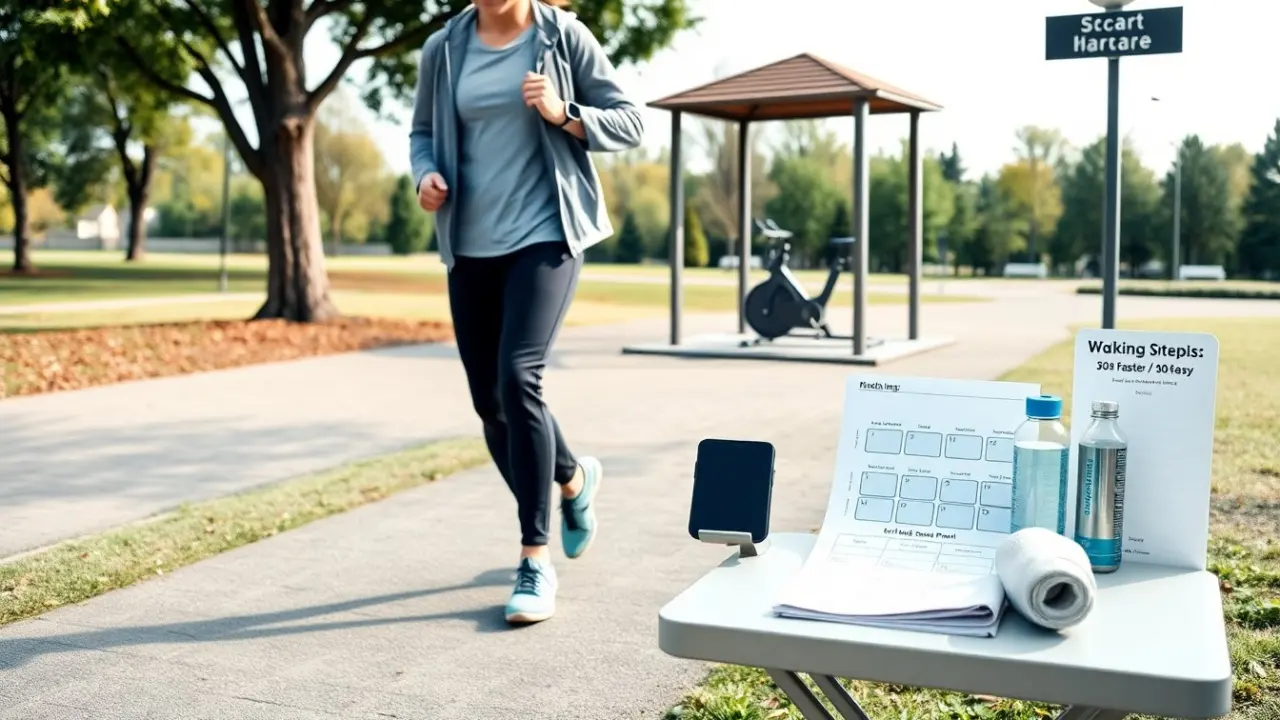
Cardio for beginners helps people build fitness and heart health. A person can start with low-impact moves and short sessions. The plan below gives clear steps and progressions. It uses walks, basic intervals, and bodyweight moves. The guidance focuses on safety, gradual increase, and measurable progress.
Key Takeaways
- Cardio for beginners boosts heart health and stamina by starting with enjoyable, low-impact activities like walking, cycling, or swimming.
- Begin with short sessions of 10–20 minutes at moderate intensity, increasing duration gradually by 5 to 10 minutes weekly.
- Incorporate interval training and cross-training with different cardio activities to build fitness safely and maintain motivation.
- Follow a structured 4-week plan mixing steady and interval workouts to steadily improve endurance and heart function.
- Prioritize safety by warming up, cooling down, monitoring effort with RPE, and stopping if experiencing chest pain or dizziness.
- Track progress by recording session details and performing simple fitness tests biweekly to stay motivated and measure improvements.
Why Cardio Matters and How To Get Started
Cardio for beginners improves heart function and stamina. It lowers resting heart rate and helps control weight. A beginner should choose an activity they enjoy. Walking, cycling, and swimming work well for most people. They should test intensity with a simple talk test. If a person can speak a few words but not sing, they work at moderate intensity.
They should start with short sessions. They should aim for 10 to 20 minutes per session in week one. They should perform sessions three times per week. They should focus on consistency before duration. They should increase time by five to ten minutes each week.
They should use shoes that fit and a flat, safe route. They should track sessions with a simple app or a notebook. A beginner should measure time, perceived effort, and any pain. They should stop if they feel sharp chest pain, severe dizziness, or faintness. They should seek medical advice when they have heart disease risk factors.
Beginner‑Friendly Cardio Exercises With Easy Progressions
Cardio for beginners can include walking, stationary cycling, and low-impact aerobics. A person can use intervals to raise intensity without long hard efforts. Example progression for walking: week one: walk 10 minutes steady. Week two: walk 15 minutes with two 30-second faster bursts. Week three: walk 25 minutes with four 1-minute faster bursts.
Cycling progression follows the same pattern. A person pedals easy for warm-up. They increase resistance or cadence for short bursts. Swimming progression uses alternating easy laps and slightly faster laps. Low-impact aerobics and step routines use short sequences of movement and rest. A person should keep intervals short at first. They should increase interval length every one to two weeks.
They should combine two different activities per week. A person could walk Monday and cycle Thursday. Cross-training reduces overuse and keeps motivation high. They should practice good form for each exercise. A person should keep posture upright and breathe steadily. They should avoid holding their breath during effort.
A Practical 4‑Week Starter Plan You Can Stick To
This plan helps a beginner build habit and stamina. It uses three sessions per week. It mixes steady work and interval work. Each session includes a 5-minute warm-up and a 5-minute cool-down.
Week 1
- Session A: Walk 10 minutes steady. Cool down 5 minutes.
- Session B: Cycle 12 minutes steady. Cool down 5 minutes.
- Session C: Walk 15 minutes with two 30-second faster bursts.
Week 2
- Session A: Walk 18 minutes with three 45-second faster bursts.
- Session B: Cycle 20 minutes steady with gentle resistance.
- Session C: Low-impact aerobics 20 minutes (30 seconds effort, 90 seconds easy).
Week 3
- Session A: Walk 25 minutes with four 1-minute faster bursts.
- Session B: Cycle 25 minutes with alternating 2 minutes hard, 3 minutes easy.
- Session C: Swim or aqua session 25 minutes steady.
Week 4
- Session A: Walk 30 minutes steady or with two 3-minute faster blocks.
- Session B: Cycle 30 minutes with structured intervals (1:1 work to rest).
- Session C: Mixed cardio 30 minutes (choose two activities for 15 minutes each).
They should increase weekly total time by about 10 to 20 percent only when sessions feel manageable.
Safety Tips, How To Schedule Workouts, And Track Progress
A beginner should check with a healthcare provider when they have chronic conditions. They should warm up and cool down for every session. They should include two days of rest or light activity per week. They should avoid back-to-back high-intensity sessions at first.
They should watch for warning signs. They should stop for chest pain, severe breathlessness, lightheadedness, or unusual joint pain. They should use RPE (rate of perceived exertion) or a heart rate monitor to gauge effort. They should aim for moderate RPE most sessions.
They should schedule workouts at consistent times. They should pick morning or evening based on energy and obligations. They should block time on a calendar and treat it like an appointment. They should pair workouts with a habit, such as finishing work or after breakfast.
They should track progress with clear metrics. They should record session date, duration, type, and RPE. They should record one simple fitness test every two weeks, such as a timed 1-mile walk or a 6-minute walk test. They should note improvements in pace, distance, or recovery heart rate. Small gains show progress and keep motivation high.