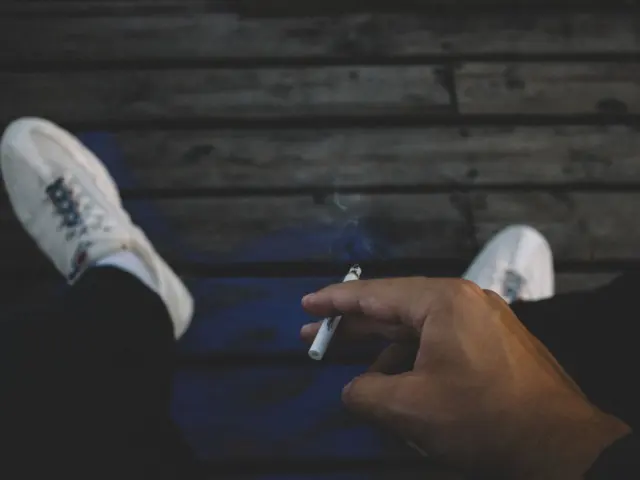
What happens after you quit smoking starts within hours: heart rate slows, blood pressure steadies and nicotine clears from the blood. Many withdrawal symptoms fade within a few weeks, while heart and cancer risks keep falling for years.
This page follows each stage in order, pairing the body changes with the symptoms you are likely to feel and a practical way to handle them. For the full list of gains, read our overview of what happens when you quit smoking, then use this timeline as the stage-by-stage companion.
The first 24 hours
The body begins to change before the first day is over. Victoria’s Better Health Channel says your heart rate slows and your blood pressure becomes more stable within six hours, and that your bloodstream is almost nicotine free within one day. Smokefree.gov adds that quitting can lower blood pressure and heart rate almost immediately, and that your risk of a heart attack declines within 24 hours.

Carbon monoxide follows a similar pattern. A UTHealth Houston summary of National Geographic reporting notes that carbon monoxide in the blood of smokers is roughly three times higher than normal and returns to normal within days. You will not feel most of this. What you will feel is the absence of nicotine.
What to expect and how to handle it
Cravings are the main thing to plan for on day one. They may be strong at first, but they usually last only a few minutes, so the goal is to get through each one rather than to white-knuckle the whole day. Have a short distraction ready before the first urge arrives, such as a walk, a glass of water, a phone call or a task that needs both hands.
- Expect disrupted concentration and sleep. Trouble concentrating or sleeping is on the standard list of withdrawal symptoms, so a rough first night is a sign of withdrawal, not of failure.
- Treat the first day as a milestone. The heart-related changes begin immediately, which makes the first day worth acknowledging even when it feels uncomfortable.
The first weeks: lungs clear and cravings fade
Breathing and senses improve quickly, while withdrawal symptoms take longer to settle. The two run side by side, which is why the first weeks can feel both better and worse at once.
Lungs, taste and smell
Within one week your sense of taste and smell may have improved, according to the Better Health Channel. Smokefree.gov says that within two weeks you might notice it is easier to walk up the stairs, and that cilia start to regrow and regain normal function very quickly after you quit. Over the following weeks, the UTHealth Houston summary says, lung function improves and coughing decreases.
Use easier stairs as a simple personal benchmark. If a flight of stairs leaves you less breathless than it did before you quit, that is the lung recovery described above showing up in daily life.
Withdrawal symptoms and how long they last
The Better Health Channel lists the common symptoms, and most people will recognise several of them:
- Cravings. Strong at first but usually brief.
- Restlessness and poor concentration. These make focused work harder early on.
- Trouble sleeping, irritability and anxiety. These affect mood and decision-making, so keep your plan for urges simple.
- Increased appetite and weight gain. Often noticed within the first weeks.
On timing, many people find withdrawal symptoms disappear completely after two to four weeks, although for some they last longer, according to the same Better Health Channel page. Smokefree.gov states that nicotine receptors return to normal levels after about a month of being quit. If you are still struggling beyond that window, you are within the range the health agencies describe as possible, and it is reasonable to ask a doctor or pharmacist about support.

Three months to one year: breathing and circulation
By the three-month mark the changes are noticeable in everyday breathing and in the hands and feet. The Better Health Channel says that within three months you will be coughing and wheezing less, circulation to your hands and feet will be improving, and your lungs will be getting better at removing mucus, tar and dust. After one year your lungs will be healthier and breathing easier than if you had kept smoking.
These gains make this a good time to build up physical activity gradually. Easier breathing and better circulation mean exercise tends to feel less punishing than in the first weeks, and activity is also a practical way to deal with the appetite changes that come with quitting. If a cough or wheeze stays troublesome, a clinician can check it rather than leaving it to guesswork.
Heart and cancer risk over the years
Heart risks respond first, and cancer risks follow over a longer period. Smokefree.gov describes smoking as the leading cause of heart attacks and heart disease, and says many of these heart risks can be reversed simply by quitting. The UTHealth Houston summary adds that you lose a lot of the excess cardiovascular risk in the first two years after quitting.
| Time since quitting | Reported change in risk | Planning use |
|---|---|---|
| 2 to 5 years | Risk of heart disease has dropped significantly and keeps falling | Early milestone for anyone worried about heart health |
| 5 years | A woman’s risk of cervical cancer is the same as if she had never smoked | Worth raising at routine screening conversations |
| 10 years | Risk of dying from cardiovascular disease drops by 63 percent compared with smokers; lung cancer death risk is half that of current smokers | Shows the gap between quitters and continuing smokers |
| 10 to 15 years | Lung cancer risk is half that of someone of a similar age who keeps smoking | Long-range reason to stay smoke-free through slips and plateaus |
| 20 years | Risk of heart attack and stroke is similar to that of someone who never smoked | Near-full recovery of heart and stroke risk |
| 20 to 29 years | Risk of dying from smoking-related cancer drops by about 90 percent | Shows that benefits keep building for decades |
These figures come from Victoria’s Better Health Channel and a UTHealth Houston summary of National Geographic reporting.
The two sources describe the same trend in slightly different terms: one measures cancer risk and the other cancer death risk, and they give somewhat different time points. Read the table as a direction of travel, not a countdown with exact dates. The cardiovascular gains also build on changes you can reach sooner, since Smokefree.gov says blood becomes thinner and less likely to form dangerous clots after quitting.
Smokefree.gov also explains why cancer risk falls: quitting prevents new DNA damage and can even help repair damage that has already been done. That is the practical reason to keep going after a slip. Every smoke-free stretch stops further damage, whatever the earlier history.

Staying smoke-free at each stage
The timeline suggests a different priority at each point, and a plan that matches the stage works better than one general promise to resist.
- First days. Treat each craving as a short event. Because cravings usually last only a few minutes, a prepared distraction does more than willpower alone.
- Around the two-to-four-week mark. Many withdrawal symptoms are expected to disappear by now, according to the Better Health Channel. If they have not, that is common enough that it should not be read as a reason to relapse.
- Appetite and weight. Hunger is a recognised withdrawal symptom. Keep easy, filling snacks within reach so that a craving for a cigarette does not turn into constant grazing.
- Home and belongings. Old smoke odour can act as a reminder, so clearing it is a practical step. Our guide How To Remove Smoke Smell From Wood Furniture: A Practical Guide For 2026 – Canstopsmoking covers the furniture side.
- Mouth and senses. Taste and smell may improve within the first week, which is a good moment to look at your mouth too. See gum health after quitting smoking for that part of recovery.
- Persistent difficulty. If symptoms are severe or repeated attempts fail, speak to a doctor or pharmacist about medication and behavioural support instead of repeating the same approach.
Frequently asked questions
Does quitting reverse lung damage?
Partly. Smokefree.gov says cilia start to regrow and regain normal function very quickly after you quit, but scarring of the lungs is not reversible.
Will I gain weight after quitting?
You may. The Better Health Channel describes increased hunger as a common withdrawal symptom that settles down with time, and says weight gain may last several weeks.
Is it worth quitting after smoking for many years?
Yes. Smokefree.gov says many heart risks can be reversed by quitting, and that quitting prevents new DNA damage and can help repair damage already done.