
Positive affirmations for mental health work best as a supporting coping habit, not a treatment: short statements that counter negative thoughts and restore a sense of competence under pressure, used alongside therapy, journaling or mindfulness.
The sections below explain how the practice works, which phrases suit which challenge (including cravings and stress while quitting), and how to build a routine. If you are also dealing with anxiety after quitting smoking, treat affirmations as one tool among several.
How affirmations work
An affirmation is a word or phrase you say to yourself to counter a negative thought. Crisis Text Line describes them as words or phrases said to oneself to counter negative thoughts. The mechanism has three parts: a threat or stressful thought, a deliberate reminder of something you value or can do, and a change in how you respond next.
Restoring self-competence under threat
The most useful research on self-affirmation looks at values rather than slogans. A peer-reviewed study indexed in PubMed Central reports that self-affirmations can restore self-competence: reflecting on core values restores perceived competence when it has been threatened. For anyone quitting smoking, that matters because a craving or a stressful day often brings the thought “I can’t do this”. An affirmation tied to a real value or ability answers that thought directly.
What happens in the brain, and what follows
The same study used fMRI and found increased activity in the medial prefrontal cortex and posterior cingulate cortex, regions involved in self-processing, when people reflected on future-oriented values. Activity in these regions also predicted changes in sedentary behavior in a separate physical activity intervention. That is a link between affirmation and later behavior in one domain. It does not show that affirmations stop cravings, so treat it as a reason to take values-based phrases seriously, not as a guarantee.
Reducing distress and defensiveness
A Healthy Nurse Healthy Nation article on affirmation notes that when you habitually reflect on your values, you are less likely to experience distress or react defensively in challenging situations. The same article cautions that current research on the benefits of affirmation is limited and needs more study. The balanced reading: affirmations are low-risk and plausibly helpful for stress, but the evidence is still developing.
Affirmations as self-talk and reframing
Self-talk is the running commentary you keep in your head, and affirmations change its content. Crisis Text Line frames the practice as a way to replace critical or negative self-talk with positive and uplifting statements, with “I am capable of learning and improving” as an example.

This overlaps with cognitive reframing, but with a difference in method. Spring Health links affirmation practice to CBT and DBT principles, specifically responding to thoughts rather than arguing with them. In practice, that means you do not have to win a debate with a harsh thought. You answer it with a steadier statement and carry on. A phrase that sounds like an argument or a wild boast invites the debate you are trying to avoid, so keep wording plain and credible to you.
Example phrases by challenge
Match the phrase to the moment. A phrase for a craving needs to be usable in the middle of an urge, while a phrase for low mood can be calmer and more reflective. The table gives sample wording you can adapt.
| Challenge | Example phrase | Planning use |
|---|---|---|
| Craving or urge | “I can notice this urge and still choose my next step.” | Say it when the urge appears. It responds to the thought instead of arguing with it. |
| Stress spike | “I have handled hard moments before, and I can handle this one.” | Use it when pressure builds, to rebuild a sense of competence. |
| Anxious thoughts | “I can breathe and let this thought pass.” | Pair it with slow breathing or a mindfulness pause. |
| Self-doubt after a setback | “I am capable of learning and improving.” | Replaces a critical verdict on yourself with a statement about growth. |
| Difficult circumstances | “I am not defined by my circumstances or what happened to me.” | Useful when old stories or a bad week feel like the whole picture. |
| Low motivation | “Actually, I can.” | A very short phrase suits moments when longer wording feels forced. |
| End of the day | “I did what I could today, and that counts.” | Closes the day without a harsh review of it. |
The self-doubt and circumstances phrases come from examples published by Crisis Text Line and Mental Health America; the others follow the same short first-person pattern.
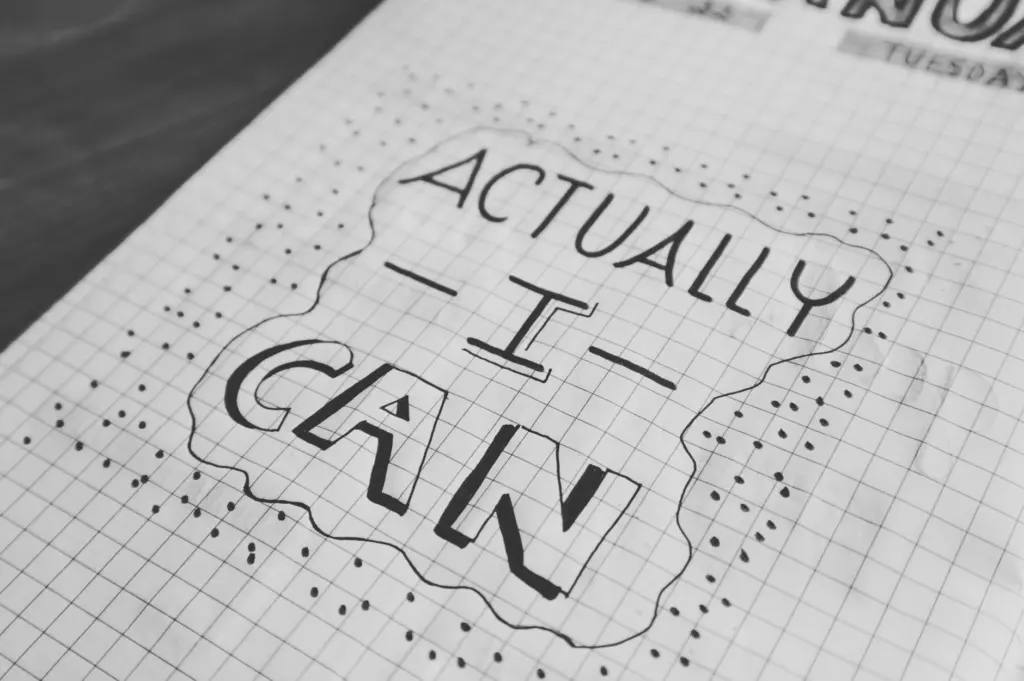
Affirmations for cravings and stress while quitting
Quitting smoking puts two pressures on self-talk: urges that say you cannot manage without a cigarette, and stress that makes every setback feel like proof. Affirmations aimed at these moments should name an ability or a value, not deny the feeling.
Cravings: respond, do not debate
Because the CBT and DBT approach is to respond to thoughts rather than argue with them, a craving phrase works best when it acknowledges the urge and states a choice. “I can notice this urge and still choose my next step” does that. Phrases that insist “I don’t want a cigarette” can set up a contest with a thought that clearly feels otherwise. If you want a larger set of wording aimed at this stage, Positive Affirmations For Recovery: 40+ Empowering Phrases To Reclaim Your Life In 2026 – Canstopsmoking collects more phrases for recovery.
Stress and mood: anchor to values
Since reflecting on values restores perceived competence under threat, stress phrases can name what you are protecting: your health, your family, the person you are becoming. Write one that fits your own reasons for quitting, because a personal value carries more weight than a generic line. Say it before a situation you expect to be difficult, and again afterwards if it went badly, so that a bad moment does not become a verdict on your progress.
Building a daily routine
Consistency matters more than volume. Crisis Text Line’s advice is to repeat them at the same time every day, and also to use them when a negative thought appears. That gives you two triggers: a scheduled moment and an in-the-moment use.
- Pick a small set of phrases. Choose phrases that match your most frequent difficulty, such as cravings or stress, rather than trying every line in the table.
- Fix a time. Attach the practice to a moment that already happens every day so it does not depend on remembering.
- Keep the phrase visible. A written note works as a reminder at the moments you need it.
- Use it on demand. When a critical thought or an urge appears, say the phrase and then move to your next planned action.
- Revise when a phrase stops landing. If a line feels hollow, rewrite it in plainer, more believable wording.
Pairing with other tools
Spring Health notes that affirmations work best paired with other tools like therapy, journaling, or mindfulness practices. Journaling gives you room to explore why a phrase does or does not feel true, and 50 Journaling Prompts For Mental Health: Build Clarity, Calm, And Resilience – Canstopsmoking offers prompts to do that. A short mindfulness pause before repeating a phrase helps you notice the thought you are answering.
Limits and when to seek professional help
Affirmations are one coping strategy alongside things like therapy and exercise; Crisis Text Line is explicit that they aren’t a magic pill for mental health. Spring Health likewise says they are not a replacement for therapy or professional mental health care.
If low mood, anxiety or distress is persistent, getting worse, or interfering with daily life, speak to a doctor or qualified mental health professional rather than relying on self-help phrases. The same applies if your thoughts turn to harming yourself: seek urgent help from local emergency or crisis services. A clinician can also help tailor affirmations to treatment goals, so the practice supports the care you are receiving.
Frequently asked questions
Do affirmations help mental health?
They can help as a supporting habit. Reflecting on core values restores perceived self-competence under threat, but research on affirmation benefits is still limited, and they are not a standalone fix.
How often should I use them?
Use them at the same time each day, and again whenever a negative thought appears.
Can affirmations replace therapy?
No. They are a self-help tool that can sit alongside therapy, journaling or mindfulness, not a substitute for professional care.
What is the difference between an affirmation and cognitive reframing?
Both change how you relate to negative self-talk. An affirmation replaces a harsh thought with a supportive statement, and its CBT and DBT link is responding to the thought rather than arguing with it.