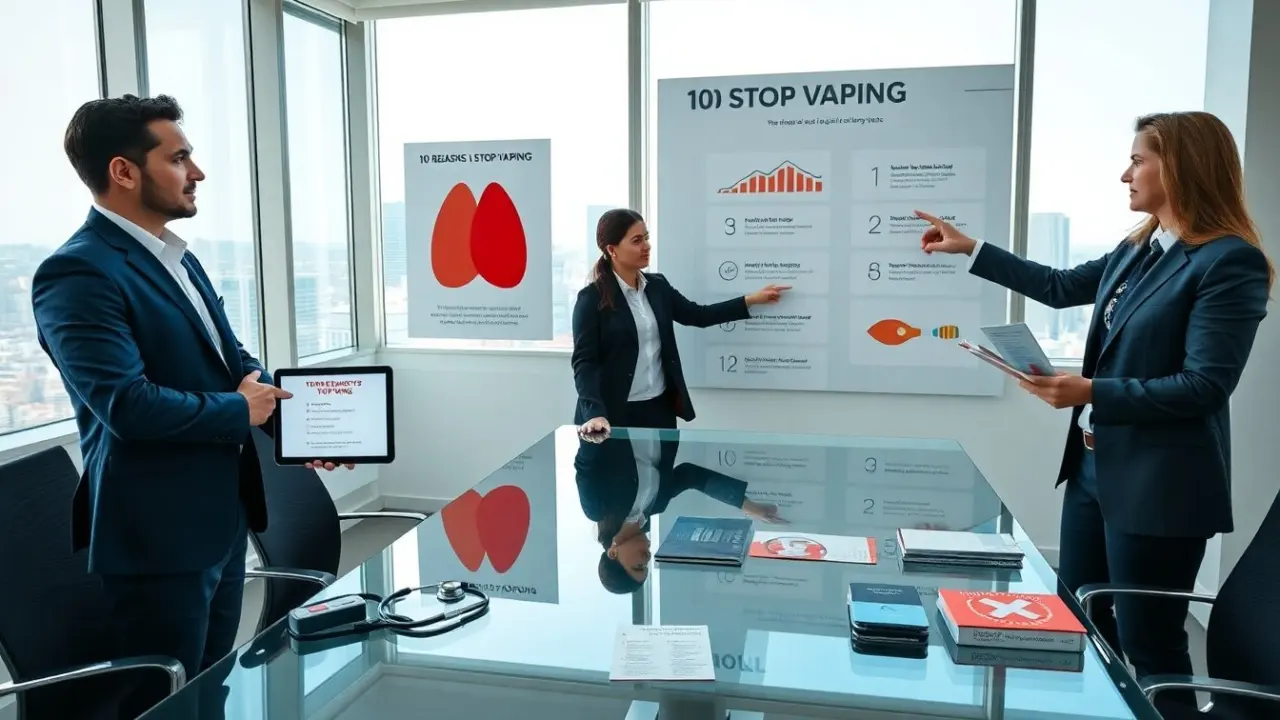
10 reasons to stop vaping appear often in public health messages. This article lists clear reasons to stop vaping now. It shows how vaping harms health, affects mood, drains money, and harms life plans. It gives practical steps and resources. It suits readers who want fast facts and a direct path away from vaping.
Key Takeaways
- Stopping vaping immediately reduces serious health risks like lung injury, heart strain, and impaired immune function.
- Vaping nicotine leads to addiction and worsens mental health by disrupting mood and cognitive abilities, especially in young people.
- Quitting vaping during pregnancy protects fetal brain and lung development from nicotine harm.
- Vaping drains money and damages social relationships through isolation and public restrictions.
- Effective quitting strategies include setting a quit date, removing vaping supplies, using replacements or medications, and seeking professional support.
- Quitting vaping brings lasting benefits by improving health, saving money, and enhancing social life.
The Health Harms: Immediate And Long‑Term Risks
Vaping causes lung irritation and breathing problems soon after use. People report coughing, chest tightness, and shortness of breath. Studies link vaping to cases of acute lung injury. The vapor can contain nicotine, flavor chemicals, and metals. Those substances injure lung tissue and reduce oxygen transfer.
Vaping raises heart rate and blood pressure. Nicotine stimulates the nervous system. That stimulation increases heart workload and risk for heart disease over time. Youth who vape show early signs of arterial stiffness compared with nonusers.
Vaping affects the immune response in the lungs. The immune cells show altered function after exposure to vapor. That change reduces the lung’s ability to fight infection. People who vape face higher risks during respiratory outbreaks.
People inhale flavoring agents that the lungs did not evolve to process. Some flavor compounds break down into toxic byproducts when heated. Those byproducts damage cells and raise cancer risk in laboratory studies. Long-term cancer risk from vaping remains under study, but plausible mechanisms exist.
Pregnant people who vape expose the fetus to nicotine. Nicotine harms fetal brain and lung development. The result can include lower birth weight and developmental differences. Health agencies advise avoiding nicotine in pregnancy.
For these reasons, one key reason to stop vaping is to prevent both immediate harm and future disease. Doctors advise quitting as the most direct way to reduce these risks.
Mental Health, Addiction, And Cognitive Effects
Nicotine creates addiction quickly in many users. Young brains adapt faster to nicotine. That adaptation increases dependence risk for teenagers and young adults. Addiction makes quitting harder and fuels repeated use even though harm.
Nicotine changes mood and stress responses. Users often feel calmer while vaping and more anxious when they stop. That cycle creates a false sense of benefit. Over time the baseline mood can worsen because the brain expects nicotine.
Vaping can harm attention and learning. Studies show nicotine exposure in adolescence can impair memory and focus. Those cognitive effects matter for school, work, and daily tasks. Employers and educators report attention problems linked to nicotine use.
Vaping can mask other mental health issues. People who feel anxious or low may use nicotine to cope. That coping delays proper treatment for depression and anxiety. Medical providers recommend addressing the underlying condition instead of relying on vaping.
Quitting nicotine improves mental health in weeks to months for many people. Withdrawal symptoms peak early and then ease. Professionals offer behavioral therapy and medication to aid quitting. For those reasons, mental health and addiction form a major reason to stop vaping.
Financial, Social, And Practical Costs — Plus How To Quit
Vaping costs money every week. Devices and pods require replacement. Popular brands charge premium prices. People who vape often spend hundreds of dollars per year. That spending reduces savings and limits other choices.
Vaping changes social dynamics. Some friends and family avoid secondhand vapor. Workplaces and public spaces ban vaping. Those bans isolate users and limit where they can be. Social friction creates stress and damaged relationships.
Vaping brings practical hassles. Devices leak, batteries fail, and shops run out of stock. Travelers face rules about carrying devices. Schools and workplaces impose strict penalties for possession. Those hassles add time and anxiety to daily life.
How to quit: First, set a clear quit date and tell supportive people. Second, remove devices and supplies from sight. Third, choose tools that fit the person: nicotine replacement, prescription medicines, or behavioral support. Fourth, use short plans: replace a vaping session with a walk, drinking water, or calling a friend. Fifth, expect slip-ups and treat them as learning moments.
Professional help improves success. Primary care providers can prescribe medication and refer to counseling. Many local health departments offer free quit programs and nicotine replacement. National quitlines provide coaching by phone or text.
One final reason to stop vaping now is the positive compound effect. Quitting saves money, improves relationships, and restores health. With a plan and help, many people stop for good.